Posts

Showing posts with the label Advanced Materials

Specialty Paper; Play Vital Role in the Packaging, Printing, Construction, and Labeling Industries
Image
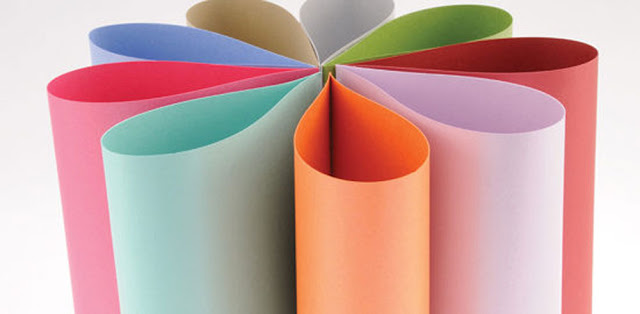
  Specialty Paper   Specialty papers are special grades of paper that have specific properties and characteristics designed for a specific end-use. These papers are useful in distinct ways to enhance the function, processing, or decoration of another product. From currency to décor papers, coffee filters, carbonless copy paper, and insulation paper, they are present in the daily lives of consumers. Specialty paper is one of the most important segments of paper and plays a vital role in various industries, such as printing, packaging, labeling, and construction.   Specialty paper is not only used in printing and writing but has a wide scope of use in various other end-use applications. These papers offer many benefits such are light in weight, colorful, attractive, waterproof, temperature resistant, and non-reactant, which has helped them gain traction in various industries, especially in the packaging industry. Furthermore, the growing trend of decorative interiors around...
Evaporation Provides Very Pure Coatings, Compared With Sputtering Targets and Chemical Vapor Deposition

Image
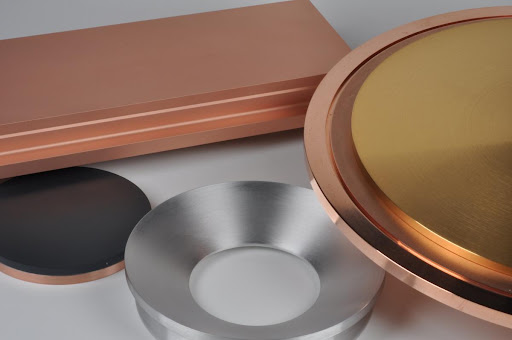
  Evaporation Materials   In thin-film precious metal coatings, evaporation materials are utilized to achieve high purity, repeatability, cleanliness, and homogeneity. Pellets, granules, starting supplies, and other forms are available for both thermal and e-beam evaporation processes. Some of the most common evaporation materials include oxide, fluoride, silicide, sulfide, nitride, carbide, boride, selenide, and telluride ceramics. Evaporation materials include precious and non-precious metals, as well as alloys. Electronics, optical, power & energy, packaging, automotive, and aerospace are just a few of the industries that use evaporation materials extensively.   According to Coherent Market Insights, the global evaporation materials market is expected to reach US$ 2,515.9 million in revenue by the end of 2027, rising at a CAGR of 7.4% over the forecast period. Read more @ https://bit.ly/3KfjiwO Source: https://www.coherentmarketinsights.com/market-insight/evaporati...

Geosynthetics Industry Continues To Expand With Increasing Use of Geosynthetic Products in Various Industries Including Civil Engineering

Image
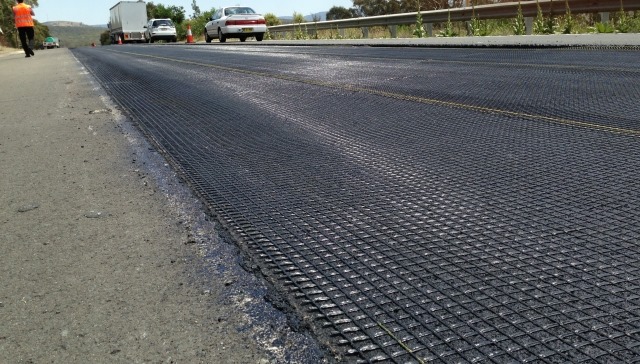
  Geosynthetics  Market   Geosynthetics are materials that are made from polymer and other chemical substances. The polymer used in geosynthetics is extracted from coal, natural gas, limestone, and other sources. These materials are used to create filters and reinforcements for foundations. They can also be used in other areas. The benefits of Geosynthetics are endless. They can be used in many different ways for a variety of projects.   Geosynthetics are materials that are used for many purposes, from containment and separation to reinforcement and filtration. These products are becoming increasingly popular, and their use in civil engineering is expanding. Typically, they are manufactured from a polymer that can be separated into several categories, including wovens, non-wovens, knitted, and non-woven. A geosynthetic layer consists of a polymer plastic material that acts as a reinforcing layer for the underlying soil structure, such as a retaining wall.  ...

There is a growing demand for fire resistant glasses because of fire-related accidents

Image
Heat Treated Glass   Heat resistant glass is a type of glass that has been specially designed to withstand high temperatures in kitchen appliances and industrial applications. The structure of heat-resistant glass is typically made of high-temperature resistant materials such as soda-lime or silica. These glasses have a high melting point as well as a low coefficient of expansion. Through interaction with electricity, light, or heat, smart glass can change its properties from transparent to translucent and block out light. Smart glass enables architects, designers, engineers, and builders to create building facades and comfortable interior spaces that are free of glare, solar heat gain, and UV exposure. The change from clear to opaque smart glass can be triggered by wall switches, remote controls, movement sensors, light sensors, or timers.   Heat treated glass not only resist fire but also act as an insulator, assisting in the maintenance of a constant temperature requi...

Plastic materials are driving the growth of the global bismuth oxide market, such as automotive materials and other industrial materials

Image
  Bismuth oxychloride (BiOCl) is an inorganic bismuth material that is also known as white pearlescent pigments. Because of the interruption of light waves affected by its tray structure, it has a pearly iridescent light reflectivity similar to the nacre. Europe has been the world's largest consumer and exporter of bismuth oxychloride in recent years, and it will continue to be so in the coming years.   Copper oxychloride, also known as tribasic copper chloride (TBCC), is a common fungicide. It competes with a variety of copper compounds in a variety of applications. The increasing demand for Bismuth oxychloride in the agriculture industry for use as a fungicide is the primary factor driving the global copper oxychloride. Fungicides are widely used on fruits and vegetables. Various generic and specific fungicides have been developed for use in fruit and vegetable crops. Copper oxychloride is used in the production of commercial feed supplements. It is used in feed formulati...

Evaporation Materials-The robust expansion of both the electronics and the optics industries in recent years

Image
  Physical vapor deposition is a common method for depositing a thin film or layer of material on a substrate. Sputter coating and evaporation coating are two commonly used techniques for physical vapor deposition. Evaporation substances are target materials that are coated onto a substrate using an evaporative coating technique. The evaporation coating process is performed in a vacuum chamber to ensure direct and even deposition of evaporation substances on the substrate. Furthermore, the process has relatively higher efficiency.   There is a wide range of evaporation materials available on the market, including elements, alloys, ceramics, and composites, as well as other specialty materials with varying purity levels. Evaporation substances are typically chosen to improve the surface properties of the substrate materials. This may include, among other things, increasing or decreasing thermal and electrical conductivity, corrosion prevention, aesthetic finishing, and metal...